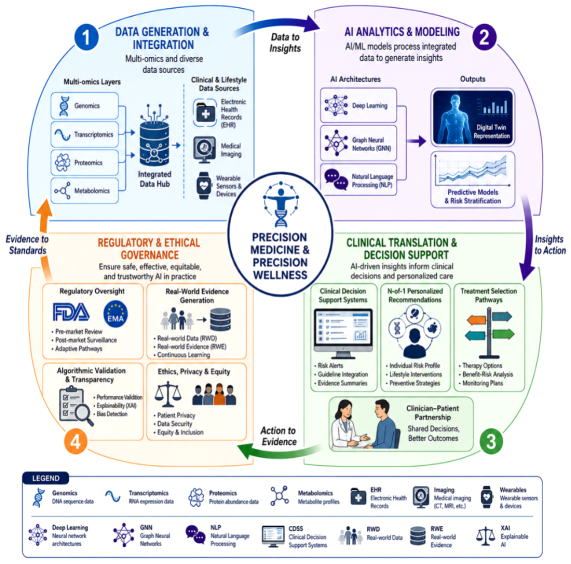
Figure 1. Framework for AI-Enabled Multidiciplinary Precision Medicine Research AI-driven multi-omics integration5
Amna Batool1*
1Department of Surgery, Federal Shaikh Zayed Postgraduate Medical Institute, FPGMI, Lahore, Pakistan
*Correspondence: dramna28@gmail.com
Received: 21 May, 2026; Revised: 06 June, 2026; Accepted: 09 June, 2026; Published: 20 June, 2026
Precision medicine together with AI technologies is paving the way for the transformation from population-based to person-centric approaches to health care, thereby dramatically altering the landscape of multidisciplinary research in medicine. This editorial delves into the transformative potential of multi-omics integration through AI, network medicine, and the emergence of next-generation precision wellness frameworks, highlighting a novel approach. These developments hold the potential to shorten the drug discovery process, improve the precision of diagnostics, and improve outcomes for patients, but there are important issues around data harmonization, transparency of algorithms, regulatory review, and equitable access. This editorial explores a journey towards “next generation precision medicine”, highlighting the potential to digital twins, federated learning and N-of-1 clinical decision support. Inter-disciplinary teamwork, strong validation structures and governance processes that uphold patient safety are needed for the future. In conclusion, to make progress toward the vision of precision healthcare, we need to rethink research models, clinical practice and regulatory processes to realize the full potential of AI while mitigating its limitations and biases.
Keywords: Precision Medicine; Artificial Intelligence; Multiomics; Biomedical Research; Machine Learning; Translational Research
In the last twenty years, a ‘quiet revolution’ has taken place in medicine and been fueled by two dynamic forces: the growing notion that patient cohorts can be stratified for precision therapy and the development of technology to profile the patients at a molecular level using multi-omics1. So, this convergence has created a “next-generation precision medicine”, which focuses on quality of life that would be patient-centric and data-driven. It can be predictive, preventive, personalized, and participatory2. The challenge of integrating and deriving clinical insights from the vast amounts of data (genomic, transcriptomic, proteomic and metabolomic) is solved by artificial intelligence (AI), it can compute and identify hidden patterns that are beyond the capacity of human analysis3. Connecting network medicine with AI, specifically with deep learning, marks a revolution in reimagining the disease from a single-targeted approach to understanding the disease at a systems level in order to more closely understand its mechanisms4. The conceptual framework for AI-enabled multidisciplinary precision medicine research is depicted in Figure 15. Biomedical research, particularly in molecular pathogenesis, increasingly recognizes that the disease process can result from complex interactions among molecules and cells in a wide range of molecular levels of the genome, epigenome, transcriptome, proteome and metabolome6. Single-omics analyses do not account for the potential interactions and interdependencies between the identified markers and complex feedback loops. The integration of multi-omics data via AI is a revolutionary step: AI architectures, such as deep learning algorithms, graph neural networks and transformer models, can now model biological networks altered by somatic mutations, prioritize drug gable hubs and uncover nonlinear dependencies that cannot be observed in reductionist approaches7.
The integration of multi-omics has shown great potential in oncology, particularly in treatment resistance and relapse due to the molecular heterogeneity. The recent developments in spatial omics and single-cell sequencing now provide greater analytical bandwidth, allowing researchers to define in a scalable way gradients of gene expression, microenvironment and clonal hierarchy within an intact tissue architecture8. Together with the pattern recognition of AI, these technologies are helping to make the static tissue sample into a high-dimensional atlas that reveals the spatiotemporal choreography of disease evolution.
The pharmaceutical industry is at a pivotal point with approximately 90% of clinical trials fail, and it costs almost $2.6 billion to get one new drug approved. It indicated the limited efficacy of reductionist models of disease processes, as they fail to explore the chemistry of disease pathogenesis9. The combination of multi-omics and AI represents a series of key paradigm shifts in drug discovery, including moving drug discovery from mono-target molecule to network pharmacology models, replacing linear to parallel adaptive cycles, and moving from population-based drug towards patient-based simulations with digital twins. The Natural language processing tools aid in the interpretation of genomes, which includes current extraction of essential medical data from electronic health records to suggest suggestions for the diagnosis of rare genetic disorder10. AI-designed therapeutics have already shown promise in cutting down the development timeline to phase II trials by 60% compared to traditional benchmarks. Network medicine has become a promising paradigm to elucidate disease mechanisms. We can find network biomarkers and predict which current medications would be effective for novel diseases by using molecular network models of disease11. With the application of AI to network medicine, mechanism dissection can be taken to the computational level and provides a computational deconvolution of the pathobiological mechanisms. Such strategy has the potential of being effective particularly for polygenetic diseases like neurodegenerative and cardiovascular diseases.
Figure 1. Framework for AI-Enabled Multidiciplinary Precision Medicine Research AI-driven multi-omics integration5
One of the most impactful uses of digital twins is virtual models, which have the properties and disease progression of the unique patient12. These patient-specific avatars can then be used to simulate treatment response in the context of treatment testing in the "virtual patient" before being deployed in the "real patient." Digital twins are not limited to predictive modeling, it also explores multimodal interventions, personalized risk assessment, and data-driven learning from actual outcomes13. The “N-of-1” personalized medicine is a paradigm shift from population based clinical reasoning. Medical traditional AI systems are designed to work well on the majority of the population, and perform poorly on the population with rare variants, multimorbidity, or underrepresented groups14. This limitation is tackled by the multi-agent ecosystems that clusters organ system, patient population and analytic modality. It helps in making decisions in a coordination layer that withholds the reliability and uncertainty of the patient's data, providing the clinician with a decision-support packet15. It has a wide range of implications for clinical trial design and regulatory medicine. There has been an increasing interest in recommending the use of informative priors and more complex simulations as evidence of effectiveness from regulatory agencies. Regulators are taking a step to frameworks that will permit in silico digital twins to formally de-risk or complement clinical trials16. But there are some anticipated challenges, including the high computational demands, the automation bias and the necessity of having regulatory frameworks.
While substantial advances have been made in technology, the integration of AI-powered precision medicine into clinical practice is not universally omnipresent17. Two key challenges are data integrity and data provenance. AI-driven multi-omics techniques rely on diverse datasets generated by different platforms, labs, and sampling periods, each of which introduces distinct biological and technical sources of variation. Poor documentation of pre-analytical factors, batch effects, and metadata inconsistencies can introduce uncertainty into the entire analytical process, adding complexity to the performance assessment and traceability in the analytical process18. Another problem to transparency and interpretability is algorithms: many multi-omics AI models use complex, non-linear architectures that lack interpretability, preventing insights into the contributions of individual biological signals to prediction. Another important challenge is robustness in time. In the future, the data distribution of multi-omics approach can change because of the changing lab protocols, patient population, and clinical practice. There are limited mechanisms to deal with this temporal variation within the context of a static regulatory approval for long-term performance, which means that we may have uncertainty about long-term performance. Regulatory boundaries are also unclear.
Regulators and policymakers are considering modifying the way they oversee to fill these gaps, in the form of adaptive oversight at the platform level. There are a number of promising approaches. One approach involves separating platform assurance from test or pipeline validation, and also ensuring that the computation infrastructure is separate from the clinical application where they have distinct and separate evidential requirements19. This modular structure will allow the general validators and developers to gain confidence in the different layers sequentially and test the overall system with respect to its intended use. The use of data from real-world evidence is being embraced and promoted as a complimentary method of pre-market evaluation. Evidence from regular clinical settings can show safety profiles, subgroup effects, and variations in performance across a range of contexts and populations20. Additionally, when complex AI systems are applied to heterogeneous biological data, it can reveal unpredictability and failure modes that were not seen in pre-market clinical investigations. Predefined Change Control Plans have been offered as a means to pre-scheduled alterations that should be allowed in the model. These predetermined procedures outline how an approved model can be modified without full recertification to facilitate controlled adaptation and maintain the device’s safety and performance21. More generally, dynamic algorithm regulation is now a lifecycle approach that calls for continual monitoring of performance, measuring drift, and triggering intervention points based on specific risks.
The potential for multidisciplinary healthcare research is in learning health system in which data is on continual cycle. In order to achieve this vision, certain developments need to be implemented. Firstly, harmonization and interoperability standards need to be agreed upon for data to be easily embedded in institutions, platforms and modalities. Second, federated learning and privacy-preserving analytics approaches will play a crucial role in creating models across multiple datasets without sharing sensitive health information at the central location. Third, explainable AI frameworks should come under the priority to gain clinical trust and acceptance from regulators.
Precision medicine and AI are a turning point for medical research; this is the beginning of a new era in population-health care to personalized health management. AI is transforming the understanding of disease processes and treatment approaches in the context of multi-omics integration, network medicine, digital twins, and decision support in an N-of-1 fashion. But bridging this gap between theory and practice is not easy for several reasons: data harmonization and data integrity problem, algorithmic transparency, regulatory adaptation, and equitable access. The future requires a balanced approach that harnesses the potential of AI and is aware of its limitations and biases. The global health community can create an advanced, ethical and equitable precision healthcare ecosystem with practitioners working collaboratively across disciplines, powerful validation frameworks and a flexibility in the regulatory group.

Journal of Medical and Multidisciplinary Healthcare Research, J Med Multidiscip Healthc Res 2026:1(1), p1-3 (jmmhr.com) © 2026 Authors. This work is published by Multidisciplinary Scholarly Advancement and Research MSAR Institute. The full terms of Journal Publishing policy is available at https://jmmhr.org/index.php/jmmhr/journal-policies and incorporate the Creative Commons Attribution – Non Commercial (CC BY, NC 4.0) License https://creativecommons.org/licenses/by-nc/4.0/. By accessing the work you hereby accept the Terms. Non-commercial uses of the work are permittedwithoutany further permission, provided the work is properly attributed. Publisher’s Note: MSAR Institute remains neutral with regard to jurisdictional claims in published maps and institutional affiliations, and assumes no liability for the scientific accuracy or clinical efficacy of the content herein, as they rest entirely with the authors.