EDITORIAL
Advancing Multidisciplinary Health Research: Bridging Clinical
Practice, Public Health, and Translational Science
Raiyna Kramat1 | Mubashra Inam2*
1Department of Basic Medical Sciences, King Khalid University, King Khalid University Hospital, KSA | 2Allied Health Sciences, Superior University, Lahore, Pakistan
*Correspondence: Mubashra Inam (mubashrainam11@gmail.com)
Acknowledgement: None; Competing Interests: The author declared no competing interests; Grant Support and Funding Source: None; Study Ethical Approval: Not Applicable; Consent for Participation and Publication: Not Applicable; Availability of Data and Materials: Not Applicable; Use of Artificial Intelligence: Figure 1 has been created by using OpenAI ChatGPT (GPT-4o) solely for the purpose of better illustration and scientific understandings. The corresponding author declared that no other artificial intelligence or AI-assisted tools were used anywhere in this manuscript; Authors’ Contribution: RK, MI: Conception, study design, acquisition, literature search, drafting, writing, critical revision and final approval as per ICMJE.
Received: 4 September, 2026; Revised: 17 September, 2026; Accepted: 20 September, 2026; Published: 30 September, 2026
ABSTRACT
Precision Modern health care is characterized by complex challenges that stretch beyond scientific disciplines. It requires solutions and methods
that integrate clinical practice, public health and translational science approaches. The need for multidisciplinary health research is explored in this
editorial, and strategies are discussed on how to bridge the gap in translational research between individualized patient care and population
health, and between discovery and implementation. It examines the existing challenges such as institutional silos, a lack of data integration, and
misaligned incentives, but also identifies opportunities for change and transformation offered by AI, multi-omics integration, and innovative
collaborative approaches. In the future, health research will be truly transdisciplinary rather than just interdisciplinary, considering health as an
emerging characteristic of the harmonious interaction of biological, behavioral, social, and environmental systems.
Keywords: Delivery of Health Care; Evidence-Based Medicine; Interdisciplinary Research; Public Health; Translational Research, Biomedical
Health research is at a critical point in its evolution. Although we have made unprecedented advances in science and technology,
including the sequencing of genomes and artificial intelligence (AI), there has still been surprisingly little progress in measurable
health improvement 1. This translational gap draws attention to a more significant issue, specifically the disjointed integration of
health and disease information resulting from disciplinary divisions. Clinical practice, public health, and the translational science
have grown mostly as separate endeavors, with distinct methodologies2. However, the health problems of current times, such as
ageing populations, the syndemic connection between multiple chronic illnesses, antimicrobial resistance, and health inequities, require a more
holistic approach that transcends them all. The World Health Organization (WHO) defines health as total physical, mental, and social well-being
rather than only the absence of illness 3. Multidisciplinary cooperation is necessary to realize this aim. This editorial delves into the need for the
progression of multidisciplinary health studies and investigates barriers, opportunities, and avenues for an integrated future Figure 1 provides a
summary of this integrated vision, which goes beyond concurrent disciplinary activities toward a single ecosystem.
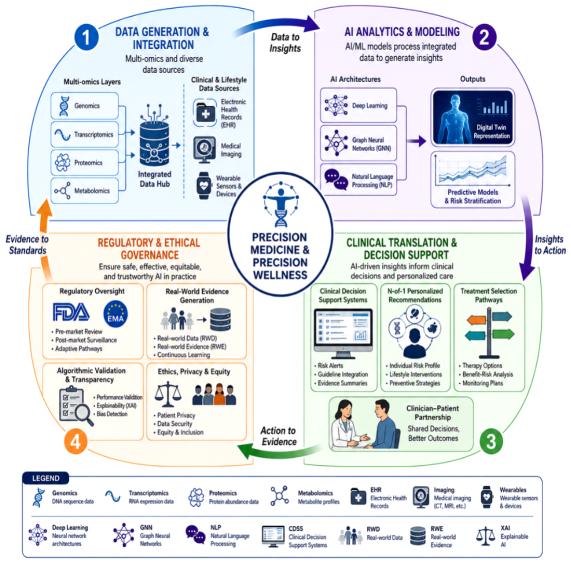
Figure 1. The Multidisciplinary Health Research Ecosystem4
The Imperative for Integration:
Health issues in today's world are multifaceted and require multidisciplinary approaches. A coordinated
approach is needed, incorporating the perspectives of clinicians, public health professionals, behavioral scientists, data analysts, and community
stakeholders in the management of diabetes, heart disease, and cancer5. The COVID-19 pandemic clearly proved that, to be effective, it was
necessary for advances in virology, clinical trials, vaccine development, public health communication, strengthening of health systems, and
implementation of policy all to occur simultaneously6. There was no single discipline that had the necessary expertise; success came from the
multidisciplinary approach. Health research must make integration a fundamental operating concept rather than a sporadic goal in an era of
complicated health issues.
Bridging Clinical Practice and Public Health:
There is a significant dichotomy between clinical medicine (which is about individual care) and
public health (which is about population health and prevention)7. Translational research that moves bidirectionally is needed to bridge this
interface; translating population-based studies into practice and aggregating clinical data from practice to guide public health strategy. Digital
health technologies and electronic health records enable real-time surveillance, population risk stratification, and learning health systems
possible8. But this is only achieved by resolving data fragmentation, privacy issues, and the differences in professional community culture. New
models are taking shape, such as community health workers, accountable care organizations, and telehealth, but expanding them and their
integration into routine operations becomes difficult.
Translational Science: From Bench to Bedside:
The aim of translational science is to speed discovery to clinical application, but that route is
inefficient. There is a continued struggle between discovery and implementation, reflecting various challenges in science and structure, including
inadequate funding, lack of incentives for scientific researchers, and a lack of implementation science integration9. A vision of multidisciplinary
cooperation can be the way forward. Multi-omics approaches, combining the whole genome, proteome, metabolome, and epigenome, give the
big picture of how things work in disease. Precision medicine programs are increasingly acknowledging that molecular interventions must
translate into population-level prevention strategies10. Learning health systems, in which systems continuously gather data to drive research, are
a promising model, but there is a significant effort needed in training more qualified members of the learning health system’s workforce and
building data infrastructure.
Artificial Intelligence and Data Integration:
From the drug discovery process to the diagnostics of imaging methods or the individual planning
of treatments, AI is changing the way we work in health research. Perhaps the most valuable aspect of AI is its ability to give a whole new
meaning to data integration, connecting together different data sources and finding new insights11. Precision medicine at scale can be achieved
by multimodal frameworks that integrate imaging, biomarkers, clinical data, and social determinants12. But still, there are major challenges to be
addressed: data quality and interoperability,algorithm bias, interpretability of models,
and clinical workflow integration. First and
foremost,
there
must
be
ethical
implementation. The evaluation process for
the AI tools should be done fairly for the
different populations and should follow the
transparency, accountability, and patient
centered approach. It calls for an
interdisciplinary effort in technical skills,
ethics,
social
populations.
Barriers to Multidisciplinary Collaboration:
Although there has been an upsurge in recognition, there are still many barriers. Collaboration is hampered by systems that promote disciplinary performance, grant review procedures that favor submissions from a single discipline, and institutional organization by discipline13. Cultural barriers are also formidable, including different methods of communication and different ways of working due to differences in language14. together will be more expensive than
beneficial. The study reveals that despite the
gaps in knowledge prevalent, articles
addressing these gaps are cited more often
and are 61% more likely to be published in high-impact journals. Cross-disciplinary projects are often not being supported through the funding
mechanisms15. Solving these challenges will need new funding mechanism, training programs fostering cross-disciplinary competencies, and
institutions that value joint accomplishment.
Future Perspectives:
The transition from multidisciplinary collaboration to true transdisciplinary integration, utilizing non-academic knowledge
like patient expertise, indigenous knowledge, and lived experience, is essential for the future. This thinking is represented in the "One Health"
paradigm, which links human, animal, and environmental health. In the same way, whole-person research takes into account physical,
psychological, and social factors, and considers health to be an emergent property of a complex line of development. Technological
developments will continue to facilitate integration. New connections among previously siloed knowledge domains can be predicted with the
help of data synthesis using AI. The digital health platform could combine clinical, behavioral, and environmental data at scale. But it requires
more than technology, and it is a matter of cultural change, institutional support, and a partnership that is equitable.
Conclusion:
Progress in multidisciplinary health research is not only academically desirable, but essential to achieve positive health impacts.
The complex health problems of the current era require an integrated approach to health that is based in clinical care, public health and
translational research. AI and data integration could bridge silos between different domains; multi-omics can shed light on the mechanisms of
disease across a larger number of cases; and learning health systems can be used for quick translation from discovery to practice. But
technologically progress comes with a cultural shift and an understanding of real partnership culture: valuing discipline while transcending
disciplinary boundaries. Multidisciplinary integration will not only be a valuable but necessary effort in the context of new challenges being
faced by health research in recent years. The ability to collaborate across boundaries to achieve common objectives is critical to both population
health and the efficacy of health systems.
References
- Smye SW, Frangi AF. Interdisciplinary research: shaping the healthcare of the future. Future Healthc J. 2021;8(2):e218-23. 3. https://doi.org/10.7861/fhj.2021
0025
- Bertagnolli MM. Advancing health through artificial intelligence/machine learning: the critical importance of multidisciplinary collaboration. PNAS Nexus.
2023;2(12):pgad356. https://doi.org/10.1093/pnasnexus/pgad356
- Schramme T. Health as complete well-being: The WHO definition and beyond. Public Health Ethics. 2023;16(3):210-8. https://doi.org/10.1093/phe/phad017
- OpenAI. ChatGPT (GPT-4o) [Computer Software]. 2026 [cited 2026 July 6]. Available from: https://chatgpt.com
- Udensi CG, Vunnava R, Durojaye TJ. Interdisciplinary collaboration in healthcare management: Strengthening healthcare delivery‒A review. Int J Adv
Multidiscip Res Stud. 2025;5(5):210-6. https://doi.org/10.62225/2583049X.2025.5.5.4881
- Robinson PC, Liew DF, Tanner HL, Grainger JR, Dwek RA, Reisler RB, et al. COVID-19 therapeutics: Challenges and directions for the future. Proc Natl
Acad Sci USA. 2022;119(15):e2119893119. https://doi.org/10.1073/pnas.2119893119
- Olver P, Bohn MK, Adeli K. Central role of laboratory medicine in public health and patient care. Clin Chem Lab Med. 2023;61(4):666-73. https://doi.org/10.1515/cclm-2022-1075
- Iqbal J, Jaimes DC, Makineni P, Subramani S, Hemaida S, Thugu TR, et al. Reimagining healthcare: unleashing the power of artificial intelligence in
medicine. Cureus. 2023;15(9):e44658. https://doi.org/10.7759/cureus.44658
- Yu X.Pioneering Multidisciplinary Innovation: A Year in Review and Vision for the Future. Med Adv. 2025;3(1):7-8 https://doi.org/10.1002/med4.90
- Tong L, Shi W, Isgut M, Zhong Y, Lais P, Gloster L, et al. Integrating multi-omics data with EHR for precision medicine using advanced artificial
intelligence. IEEE Rev Biomed Eng. 2023;17:80-97. https://doi.org/10.1109/RBME.2023.3324264
- Carini C, Seyhan AA. Tribulations and future opportunities for artificial intelligence in precision medicine. J Transl Med. 2024;22(1):411. https://doi.org/10.1186/s12967-024-05067-0
- Sahu M,Gupta R, Ambasta RK, Kumar P. Artificial intelligence and machine learning in precision medicine: A paradigm shift in big data analysis. Prog Mol
Biol Transl Sci. 2022;190(1):57-100. https://doi.org/10.1016/bs.pmbts.2022.03.002
- Brazel D, Kazakova V, Fay M, Bollin K, Mittal K, Reynolds KL, et al. Connecting the dots: practical strategies for academic and community oncology
synergy to advance multidisciplinary management in immunotherapy toxicity care. Am Soc Clin Oncol Educ Book. 2025;45(3):e473080. https://doi.org/10.1200/EDBK-25-473080
- Dawe J, Cronshaw H, Frerk C. Learning from the multidisciplinary team: advancing patient care through collaboration. Br J Hosp Med. 2024;85(5):1-4. https://doi.org/10.12968/hmed.2023.0387
- Mendes JJ. Advancing the Understanding of Oral Health Through Multidisciplinary and Translational Perspectives Insights from a Special Issue of the
Journal of Clinical Medicine. J Clin Med. 2025;14(17):6050. https://doi.org/10.3390/jcm14176050

Journal of Medical and Multidisciplinary Healthcare Research, J Med Multidiscip Healthc Res 2026:1(2), p30-32 (jmmhr.com)
© 2026 Authors. This work is published by Multidisciplinary Scholarly Advancement and Research MSAR Institute. The full terms of Journal Publishing policy is available at https://jmmhr.org/index.php/jmmhr/journal-policies and incorporate the Creative Commons Attribution – Non Commercial (CC BY, NC 4.0) License https://creativecommons.org/licenses/by-nc/4.0/. By accessing the work you hereby accept the Terms. Non-commercial uses of the work are permittedwithoutany further permission, provided the work is properly attributed. Publisher’s Note: MSAR Institute remains neutral with regard to jurisdictional claims in published maps and institutional affiliations, and assumes no liability for the scientific accuracy or clinical efficacy of the content herein, as they rest entirely with the authors.