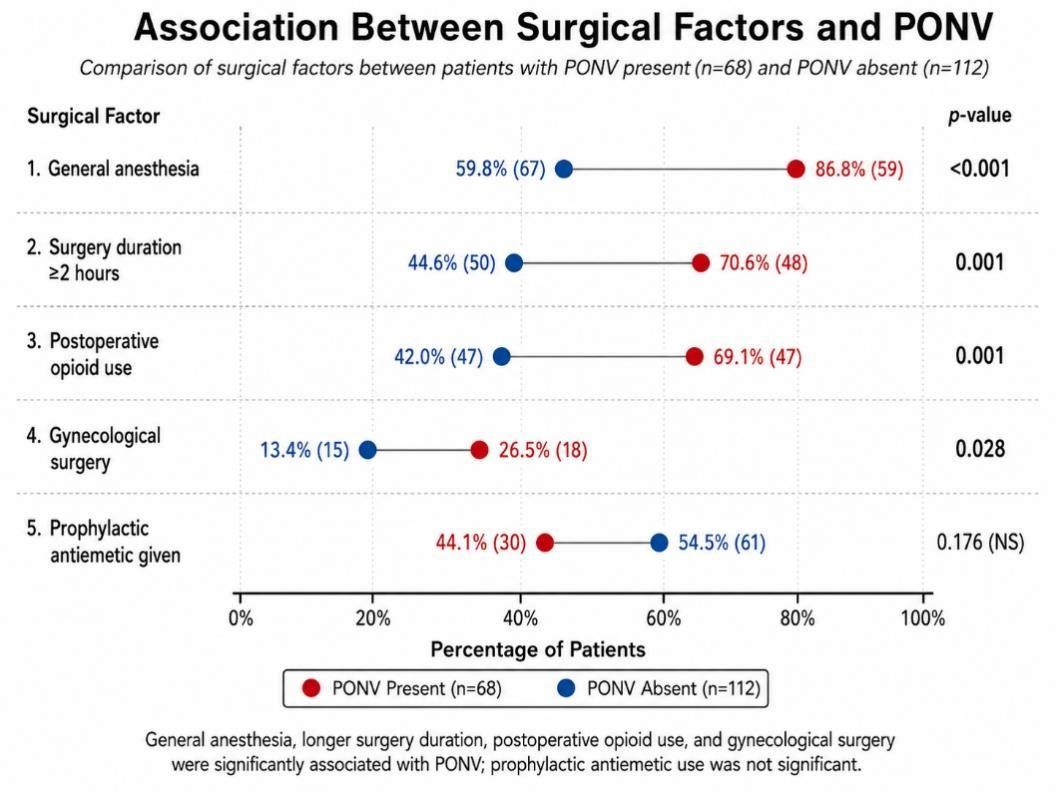
Figure 1: Comparison of surgical factors between patients with and without postoperative nausea and vomiting (PONV).
Fatima Qayyum1* | Nida Shahid2 | Ahmed Al Nasar3
1Department of Nursing, Civil Hospital Hyderabad, Karachi, Pakistan | 2Department of Nursing, DUHS, Karachi, Pakistan | 3Department of Basic Medical Sciences, King Khalid University, King Khalid University Hospital, KSA
*Correspondence: Fatima Qayyum (fatimaiqbalsurgery@gmail.com)
Received: 28 August, 2026; Revised: 14 September, 2026; Accepted: 23 September, 2026; Published: 30 September, 2026
Background: Postoperative nausea and vomiting (PONV) is a frequent complication of surgery and anesthesia that may negatively impact comfort and early recovery. This study aimed to determine the prevalence and pattern of PONV and identify patient-, anesthetic-, and surgery-related factors independently associated with its occurrence. Methods: This is a descriptive cross-sectional study conducted on 180 adults who were undergoing elective/emergency surgery under general or regional anesthesia for 6 months. Data were collected by patient interviews, anesthesia records, and hospital records on a structured form and included all the demographic, clinical, anesthetic, surgical, and postoperative data. Nausea and vomiting within the first 24 hours of surgery were recorded. SPSS version 26.0 was used for statistics, association tests and multivariable logistic regression to identify risk factors independently associated with PONV and a p-value <0.05 was considered statistically significant Results: The mean age was 45.9 ± 14.7 years, and 55.6% were female. Overall, 37.8% developed PONV, of which 21.7% suffered from nausea alone, 6.1% from vomiting alone, and 10.0% from both. Independent predictors were previous PONV (aOR=3.24; p=0.002), female sex (aOR=2.89; p=0.001), general anesthesia (aOR=2.71; p=0.008), postoperative opioid use (aOR=2.58; p=0.004), surgery duration ≥2 hours (aOR=2.36; p=0.011), and non-smoking status (aOR=2.14; p=0.047). Conclusions: More than one-third of patients experienced PONV, and factors were identified which were affecting PONV. Optimized anesthetic care, opioid-sparing analgesia, and risk-based antiemetic prophylaxis can lower the risk of PONV. These results could be confirmed and approaches for optimizing postoperative comfort, safety, and recovery explored by future multicentered research.
Keywords: Analgesics, Opioid; Anesthesia, General; Antiemetics; Postoperative Nausea and Vomiting; Risk Factors
Postoperative nausea and vomiting (PONV) is a frequently occurring and distressing side effect of anesthesia and surgery that is usually evaluated within 24 hours of surgery 1. PONV affects approximately 20–30% of the general surgical population and up to 80% of high-risk patients 2. Generally, it is self-limiting, but can delay recovery room discharge, increase length of hospital stay, impact patient satisfaction, and can lead to dehydration, aspiration, wound stress, or unplanned admission 3. PONV is a multifactorial condition with patient, anesthetic and procedural factors 4. The factors which have been established to be Apfel predictors are female sex, previous PONV or motion sickness, non-smoking status, and preoperative opioid use; other factors include younger age, longer anesthesia or surgery, volatile anesthetics, general anesthesia, and some surgeries such as gynecological, laparoscopic, and otolaryngological surgery 5,6.
Opioid use is dose-dependent, while regional and propofol-based techniques may decrease baseline emetogenic exposure 7. Although the methods mentioned above have been shown to be effective, there is some variation in the implementation of risk-adjusted prophylaxis and there are patients who still suffer PONV despite the use of preventive strategies 8. It is revealed by literature that combined use of effective methods provides better protection than any single method, especially in higher-risk patients 9. Although PONV and its associated factors have been widely studied, evidence from mixed surgical populations in individual clinical settings remains limited. The occurrence and relative importance of PONV-associated factors may vary according to patient case-mix, surgical procedures, anesthetic techniques, and institutional practices. Assessment of a heterogeneous surgical population may therefore provide locally relevant evidence to support risk stratification and preventive strategies.
The objective of the current study was to assess the occurrence and pattern of PONV within the first 24 postoperative hours and to identify patient-, anesthetic-, and surgery-related factors independently associated with its occurrence with the aim of supporting targeted prophylaxis and perioperative management.
In this prospective observational study, the occurrence of postoperative nausea and vomiting (PONV) in surgical patients was studied. The minimum required sample size was calculated using OpenEpi version 3.01 (Atlanta, GA, USA; RRID:SCR_021913) at a 95% confidence level, assuming an expected PONV prevalence of 30% and an absolute precision of approximately 6.7%, using the formula n = Z²p(1 − p)/d². The estimated sample size was approximately 180 participants, all of whom were enrolled in the study 10. Patients were included in the study who had been operated either for an emergency or elective surgery within 6 months of the study. The inclusion criteria were: adult patients (age 18 years and older) who had undergone surgery under general or regional anesthesia and given informed consent. Patients with gastrointestinal disorders that predispose them to nausea or vomiting, pregnancy, chemotherapy-induced nausea, neurological disorders with involvement of the vomiting center and lack of clinical records were excluded.
Data collection was performed through a structured data collection form, by patient interview, anesthesia records, and hospital medical records. Demographic data such as age, gender, body mass index (BMI), smoking status and previous history of postoperative nausea and vomiting (PONV) and motion sickness were documented. The American Society of Anesthesiologists (ASA) physical status, surgical procedure, anesthetic technique, surgery duration, use of opioids following surgery, preoperative use of antiemetics, and comorbidities were clinical and surgical variables. Patients were observed for the first 24 hours after surgery for the development of nausea, vomiting, and/or both. Postoperative symptoms were classified into four categories: no PONV, nausea only, vomiting only, or both nausea and vomiting. Each recovery record was reviewed to be sure there was complete documentation of events during the hospital stay.
The Statistical Package for the Social Sciences (SPSS) version 26.0 was used to input and analyze data. The data were presented as mean ± standard deviation (SD), and frequencies and percentages for continuous and categorical variables, respectively. The patient characteristics, surgical variables, and the occurrence of PONV were analyzed by Chi-square test / Fisher's exact test and independent t-test for continuous variables when appropriate. Clinically relevant variables identified a priori and variables showing an association with PONV in univariable analysis at a predefined level of significance were considered for inclusion in the multivariable logistic regression model. I was used to calculate adjusted odds ratios (AORs) with 95% confidence intervals (CIs), and a p-value < 0.05 was considered statistically significant.
IRB approval was obtained prior to the study. Informed written consent was obtained from all participants before the study began. Confidential and anonymised patient information was used during the research process.
A total of 180 patients were involved in the study who were already undergoing surgery. The mean age was 45.9 ± 14.7 years, with 58 (32.2%) aged between 35–49 years. 100 (55.6%) were females and 80 (44.4%) were male. The mean BMI was 26.4 ± 3.9 kg/m², with 70 (40.0%) overweight, whereas the most common category for physical status was ASA II (89 (49.4%)), as shown in Table 1.
| Variable | Frequency (n) | Percentage (%) |
|---|---|---|
| Age Group (years) | ||
| 18–34 | 46 | 25.6 |
| 35–49 | 58 | 32.2 |
| 50–64 | 49 | 27.2 |
| ≥65 | 27 | 15.0 |
| Gender | ||
| Male | 80 | 44.4 |
| Female | 100 | 55.6 |
| BMI (kg/m²) | ||
| Normal | 69 | 38.3 |
| Overweight | 72 | 40.0 |
| Obese | 39 | 21.7 |
| ASA Physical Status | ||
| I | 52 | 28.9 |
| II | 89 | 49.4 |
| III | 39 | 21.7 |
| Mean Age (years) | 45.9 ± 14.7 | |
| Mean BMI (kg/m²) | 26.4 ± 3.9 |
The most common surgeries were general surgery 48 (26.7%) and orthopedic surgery 44 (24.4%), and 126 (70.0%) were administered general anesthesia, 98 (54.4%) had surgery ≥2 hours, and 94 (52.2%) were administered opioids after surgery, as presented in Table 2. Overall, 68 (37.8%) patients experienced PONV; 18 (10.0%) experienced both nausea and vomiting, 11 (6.1%) experienced vomiting only, and 39 (21.7%) experienced nausea only.
| Characteristic | Category | n (%) |
|---|---|---|
| Type of surgery | General surgery | 48 (26.7) |
| Orthopedic surgery | 44 (24.4) | |
| Gynecological surgery | 33 (18.3) | |
| Urological surgery | 29 (16.1) | |
| ENT surgery | 26 (14.4) | |
| Anesthetic technique | General anesthesia | 126 (70.0) |
| Regional anesthesia | 54 (30.0) | |
| Surgery duration | <2 hours | 82 (45.6) |
| ≥2 hours | 98 (54.4) | |
| Postoperative opioid use | Yes | 94 (52.2) |
| No | 86 (47.8) | |
| PONV pattern within 24 hours | No PONV | 112 (62.2) |
| Nausea only | 39 (21.7) | |
| Vomiting only | 11 (6.1) | |
| Both nausea and vomiting | 18 (10.0) | |
| Overall PONV | Present | 68 (37.8) |
Female sex, previous history of PONV, non-smoking status, and obesity were significantly associated with PONV. PONV occurred in 49 (49.0%) of females compared with 19 (23.8) of males (p<0.001), in 24 (63.2%) of patients with a previous history of PONV compared with 31.0% of those without a previous history of PONV (p<0.001), in 60 (43.2%) of non-smokers compared with 8(19.5%) of smokers (p=0.007), and in 20 (51.3%) of obese patients compared with 48 (34.0%) of non-obese patients (p=0.047). Age <50 years was not significantly associated with PONV (42 (40.4) vs. 26(34.2%); p=0.402), as shown in Table 3.
| Variable | Category | PONV Present, n (%) | PONV Absent, n (%) | p-value |
|---|---|---|---|---|
| Sex | Female | 49 (49.0) | 51 (51.0) | <0.001 |
| Male | 19 (23.8) | 61 (76.2) | ||
| Previous history of PONV | Yes | 24 (63.2) | 14 (36.8) | <0.001 |
| No | 44 (31.0) | 98 (69.0) | ||
| Non-smoking status | Yes | 60 (43.2) | 79 (56.8) | 0.007 |
| No | 8 (19.5) | 33 (80.5) | ||
| Obesity | Yes | 20 (51.3) | 19 (48.7) | 0.047 |
| No | 48 (34.0) | 93 (66.0) | ||
| Age <50 years | Yes | 42 (40.4) | 62 (59.6) | 0.402 |
| No | 26 (34.2) | 50 (65.8) |
Percentages are calculated within each category.
*Percentages are calculated within each category.
PONV was significantly associated with general anesthesia (59 (86.8%); p<0.001), surgery duration ≥2 hours (48 (70.6%); p=0.001), postoperative opioid use (47 (69.1%); p=0.001), and gynecological surgery (18 (26.5%); p=0.028). There was no significant difference between use of prophylactics and non-use of prophylactics for antiemetic use (30 (44.1%) versus 61 (54.5%); p=0.176), as shown in Table 4.
| Variable | PONV Present (n=68) | PONV Absent (n=112) | p-value |
|---|---|---|---|
| General anesthesia | 59 (86.8%) | 67 (59.8%) | <0.001 |
| Surgery duration ≥2 hours | 48 (70.6%) | 50 (44.6%) | 0.001 |
| Postoperative opioid use | 47 (69.1%) | 47 (42.0%) | 0.001 |
| Gynecological surgery | 18 (26.5%) | 15 (13.4%) | 0.028 |
| Prophylactic antiemetic given | 30 (44.1%) | 61 (54.5%) | 0.176 |
Female gender, general anesthesia, postoperative opioid use, surgery duration ≥2 hours, and nonsmoking status were the next most important independent predictors (aOR=2.89, 2.71, 2.58, 2.36, and 2.14, respectively). All six factors remained statistically significant after adjustment, as shown in Table 5.
| Variable | Adjusted OR | 95% CI | p-value |
|---|---|---|---|
| Female sex | 2.89 | 1.51–5.53 | 0.001 |
| Previous history of PONV | 3.24 | 1.52–6.91 | 0.002 |
| General anesthesia | 2.71 | 1.29–5.69 | 0.008 |
| Surgery duration ≥2 hours | 2.36 | 1.22–4.56 | 0.011 |
| Postoperative opioid use | 2.58 | 1.34–4.98 | 0.004 |
| Non-smoking status | 2.14 | 1.01–4.56 | 0.047 |
General anesthesia, surgery duration ≥2 hours, postoperative opioid use, and gynecological surgery were significantly more common among patients with PONV, as shown in Figure 1. Prophylactic antiemetic use did not differ significantly between patients with and without PONV. The strongest association was observed for general anesthesia (p<0.001). Surgery duration ≥2 hours and postoperative opioid use also showed significant associations with PONV (both p=0.001).
Figure 1: Comparison of surgical factors between patients with and without postoperative nausea and vomiting (PONV).
Overall, 37.8% of patients experienced PONV within 24 hours after surgery. Female sex, previous PONV, general anesthesia, longer surgery duration, postoperative opioid use, and non-smoking status were independently associated with PONV after adjustment. These findings highlight the importance of identifying patients at increased risk for targeted perioperative prevention.
The present study revealed that PONV was still prevalent in a mixed adult surgical group, with 37.8% of patients developing PONV within the first 24 postoperative hours, which is Similar to a prospective observational study of 41.5% of surgical patients who developed PONV within 24 hours of surgery 11. The most common pattern of symptoms was nausea alone (21.7%), as opposed to vomiting alone (6.1%) and a combination of nausea and vomiting (10.0%). In the same way, a general anesthetic study of adults who had undergone surgery reported that 16% of them had nausea, 8% had vomiting, and 12% had both symptoms for the first 24 hours following surgery12.Independent predictors were: previous PONV, female sex, general anesthesia, postoperative opioid use, surgery ≥ 2 hours, and non-smoking status. The results were similar to previous observational studies that determined female sex, history of PONV or motion sickness, non-smoking status, perioperative opioid use, and prolonged anesthesia as key factors in PONV 13.
The strongest predictor was previous PONV (aOR=3.24; 95% CI: 1.52–6.91; p=0.002), with adjusted odds greater than three times closely corresponding to the OR of 3.27 reported in a previous study and almost three times as many women had had previous PONV (aOR=2.89; 95% CI: 1.51–5.53; p=0.001), comparable to the OR of 2.73 reported by previous studies 14,15. The age below 50 years was not significant, suggesting that age was not as informative as in previous PONV and gender in this population. Likewise, it was reported that age <50 years was not associated with early PONV, while female sex was 16. It was also identified that general anesthesia and female sex were risk factors during the initial 24 hours after surgery, as well as previous history of PONV or motion sickness; in addition, surgery of ≥ 2 hours duration more than doubled the adjusted odds, likely due to greater anesthetic exposure, opiate doses, fluid shifts, and surgical stimulation 17.
Non-smoking was still significantly linked to PONV, but the large confidence interval suggests that the measure is less precise. A similar study was conducted and found nonsmoking to be a significant risk factor for PONV, with a wide confidence interval (OR 7.66, 95% CI 1.91-30.78) 18. Similarly, this finding is consistent with a previously done study that found that non-smokers were more than twice as likely to develop PONV within 24 hours following surgery (OR 2.12, 95% CI 1.46–3.07) 19. Randomized and network evidence suggest the combination of different classes of antiemetics is effective, but recent adult data indicate that some combinations are effective only when the baseline risk is high and adherence is high, and some combinations are ineffective when the baseline risk is low and adherence is weak 20.In the present study, prophylactic antiemetic administration was not significantly associated with PONV, which may be explained by potential confounding, as prophylaxis is often preferentially administered to patients with a higher baseline risk of PONV. Therefore, the lack of significant association should not be interpreted as lack of effectiveness 21,22.
The limitations of this study are the observational study design, relatively small number of participants, and the inclusion of a mixed surgical population and observation period of only the first 24 h post-surgery. Standardization of the severity instruments, the recording of events at standardized time points, and stratification of analyses by surgery and anesthetic technique should be employed in future prospective multicenter studies. Risk-based multimodal prophylaxis and opioid-sparing routes to recovery should also be assessed in quality improvement trials to see if they decrease PONV and improve recovery
The study revealed that 37.8% of the patient’s experienced PONV, primarily as nausea alone. Some factors, such as previous PONV, female gender, general anesthesia, surgery duration ≥2 hours, opioid use after surgery, and non-smoking status, were associated with increased risk of PONV. The results highlight the importance of personalized risk assessment, multimodal perioperative prophylaxis, and opioid-sparing treatment. Standardized prevention protocols, standardized antiemetic protocols, and longer postoperative follow-ups should be analyzed in future multicenter prospective studies to minimize the incidence of PONV and enhance recovery in a variety of surgical populations in the standard perioperative setting worldwide.

Journal of Medical and Multidisciplinary Healthcare Research, J Med Multidiscip Healthc Res 2026:1(2), p38-42 (jmmhr.com) © 2026 Authors. This work is published by Multidisciplinary Scholarly Advancement and Research MSAR Institute. The full terms of Journal Publishing policy is available at https://jmmhr.org/index.php/jmmhr/journal-policies and incorporate the Creative Commons Attribution – Non Commercial (CC BY, NC 4.0) License https://creativecommons.org/licenses/by-nc/4.0/. By accessing the work you hereby accept the Terms. Non-commercial uses of the work are permitted without any further permission, provided the work is properly attributed. Publisher’s Note: MSAR Institute remains neutral with regard to jurisdictional claims in published maps and institutional affiliations, and assumes no liability for the scientific accuracy or clinical efficacy of the content herein, as they rest entirely with the authors.