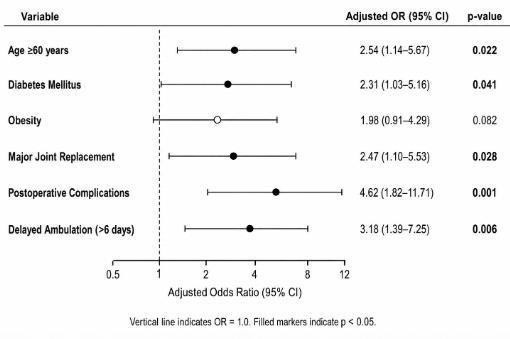
Figure 1: Forest plot showing adjusted odds ratios and 95% confidence intervals for factors associated with prolonged hospital stay.
Zainab Mubashir1* | Faiza Kamran Shah2
2Department of Surgery,Sharif Medical and Dental College,Lahore,Pakistan | 2Department of Surgery,Lahore Medical and Dental College,Lahore,Pakistan
*Correspondence: Zainab Mubashir (dr.zainabawmed@gmail.com)
Received: 14 August, 2026; Revised: 16 September, 2026; Accepted: 26 September, 2026; Published: 30 September, 2026
Background: There is variability in postoperative outcomes and hospital resources utilized among orthopedic procedures. This study aimed to evaluate hospital stays and recovery rates following orthopedic surgery and to determine the factors associated with the extended hospital stays. Methods: This prospective observational cohort included 120 adult patients who underwent elective or emergency surgery on their upper or lower extremities or spine for six months. Data were collected on a structured data-collection form, including demographic data, comorbidities, procedure type, postoperative complications, length of stay (prolonged hospital stay ≥8 days), time to independent ambulation, and recovery status at discharge. Descriptive data analysis, association, and multivariable logistic regression were carried out using SPSS software version 26.0, and p<0.05 was considered significant. Results: The mean age was 51.7 ± 16.4 years, and 70 (58.3%) were male. The mean length of hospital stay was 6.8 ± 3.2 days, and the mean time to independent ambulation was 4.9 ± 2.1 days. 85(70.8%) of the patients had good recovery on discharge, while 28(23.3%) stayed in hospital for more than 8 days. Prolonged stay was independently associated with age ≥60 years (aOR=2.54; p=0.022), diabetes mellitus (aOR=2.31; p=0.041), major joint replacement (aOR=2.47; p=0.028), postoperative complications (aOR=4.62; p=0.001), and delayed ambulation (aOR=3.18; p=0.006). Conclusions: UComplications, delayed ambulation, age, diabetes, and major joint replacement had a significant association with prolonged hospitalization, and recovery was generally favorable. Perioperative care and prevention of complications based on risk could enhance recovery and shorten hospital periods. The results should be confirmed by multicenter studies.
Keywords: Early Ambulation; Length of Stay; Orthopedic Procedures; Postoperative Complications; Risk Factors
Orthopedic surgery plays an important role in the treatment of musculoskeletal trauma, degenerative joint disease, deformity, and spinal disorders, and contributes significantly to disability and health care utilization globally1. There is significant variation in postoperative requirements for both the upper and lower extremities and spine2. Therefore, Hospital length of stay (LOS) is an important measure of recovery, utilization of resources, readiness for discharge, and efficiency of services rendered3. Patient, disease, and procedural factors all play a role in orthopedic surgery recovery 4. There are differences between the recovery pattern of the two types of operations: upper-extremity, lower extremity, and spinal procedures, due to the different weight-bearing restrictions, functional demands, complications, and rehabilitation needs that exist between the two types of surgery5.
The aim of enhanced recovery pathways is to encourage patient education, multimodal analgesia, early nutrition, avoiding complications, and early mobilization6. Further, evidence has shown that when this coordinated perioperative care is delivered, it may reduce LOS without increasing the risk of readmission or adversely affecting functional outcomes following orthopaedic surgical procedures7. Early and intensive rehabilitation can also improve mobility and the rate of functional recovery8. Most available evidence is procedure-specific, whereas fewer studies have evaluated LOS and postoperative recovery across mixed orthopedic surgical populations9. Assessment of these outcomes within a single clinical setting may help identify locally relevant patterns and opportunities to improve perioperative care, rehabilitation, and discharge planning.
The goal of this study was to characterize LOS for adult patients who have undergone elective or emergency orthopedic surgery. The secondary objective was to assess early recovery following upper-extremity, lower-extremity, and spine procedures. In addition, the study sought to determine the demographic, clinical, and procedural factors that were associated with prolonged LOS and less favorable recovery outcomes.
A prospective observational cohort study was carried out to assess the trend of hospital stay and recovery after orthopedic interventions. The sample size of 120 participants was calculated using OpenEpi version 3.01 (Emory University, Atlanta, GA, USA) at a 95% confidence level, using the formula n=Z2P(1-P)/e2, where n represents the required sample size, Z is the standard normal deviate corresponding to the confidence level, Pis the estimated prevalence, ande is the absolute precision10. Patients with electiveor emergency orthopedic surgery cases were included over a period of six months.Subjects included patients 18 years or older who had undergone any upperextremity, lowerextremity,or spinal orthopedic surgery and who agreed to be studied. Whereas polytrauma(ITU),pathological fractures(malignancy), revisionsurgery,and incomplete medical records were excluded
The structured data collection form was used to gather data from patient interviews and review of the hospital's medical records.Demographic data such as age, gender, bodymass index (BMI), presence of diabetesmellitus (DM), and hypertension were obtained. Other clinical information,such as nature of orthopedic procedure,postoperative complications,hospitalstay,and successful ambulation,was also documented. A good,moderate,or poor recovery at discharge was assessed by the orthopedic care team,based on recovery of pain,wound healing,mobility, and independence in basic activities.
The primary outcome was hospital LOS(≤5days,6–8daysand>8days),with prolonged hospital stay defined as >8days.Other outcomes included recovery at discharge and time to independent ambulation.Patients were followed prospectively from surgery until hospital discharge.
The Statistical Package for the Social Sciences(SPSS)version 26.0(Armonk,NY:IBMCorp.)was used to enter and analyze the data. Means± SDs were used to display continuous variables,and frequencies and percentages were used for categorical variables.Chi-square test was used for categorical variables to determine the association between hospital stay, recovery outcomes,and clinical variables,while independent t-test or one-way analysis of variance(ANOVA)was used as applicable for continuous variables.Variables showing statistical significance in univariate analysis were considered for inclusion in the multivariable logistic regression model; additionally, clinically important potential confounders, including age and relevant comorbidities,were considered irrespective of their univariate statistical significance.Adjusted Odds ratios(aORs) with 95% confidence intervals(CIs)were calculated,and a p-value<0.05 was regarded as statistically significant.Study approval was obtained from the departments, and informed written consent was obtained from all participants. The participants were kept anonymous, and their confidentiality was maintained throughout this study.
There were 120 patients who had undergone orthopedic procedures and were included in the study. The average age of the study participants was 51.7 years with a standard deviation (SD) of 16.4 years, with 70 (58.3%) being male, with the majority aged 40 years or older. The average BMI was 27.6 ± 4.2 kg/m², and overweight was the most prevalent finding, while hypertension and diabetes were found in 47 (39.2%) and 39 (32.5%) of patients, respectively. The most common procedures were lower-limb fracture fixation 32 (26.7%), total knee replacement 26 (21.7%), upper-limb fracture fixation 20 (16.7%), hip replacement 18 (15.0%), spine surgery 17 (14.2%), and arthroscopy 7 (5.8%), as shown in Table 1.
| Characteristic | Category | n (%) / Mean ± SD |
|---|---|---|
| Age (years) | Mean age | 51.7 ± 16.4 |
| 18–39 | 28 (23.3) | |
| 40–59 | 46 (38.3) | |
| ≥60 | 46 (38.3) | |
| Gender | Male | 70 (58.3) |
| Female | 50 (41.7) | |
| BMI (kg/m²) | Mean BMI | 27.6 ± 4.2 |
| Normal | 35 (29.2) | |
| Overweight | 51 (42.3) | |
| Obese | 34 (28.3) | |
| Comorbidities | Diabetes mellitus | 39 (32.5) |
| Hypertension | 47 (39.2) | |
| Orthopedic procedure | Total knee replacement | 26 (21.7) |
| Hip replacement | 18 (15.0) | |
| Lower-limb fracture fixation | 32 (26.7) | |
| Upper-limb fracture fixation | 20 (16.7) | |
| Spine surgery | 17 (14.2) | |
| Arthroscopy | 7 (5.8) |
Table 2 demonstrates that the mean hospital stay was 6.8 ± 3.2 days, with 49 (40.8%) of patients staying in hospital for 6–8 days, 43 (35.8%) for ≤5 days, and 28 (23.4%) for>8 days. Independent walking was reached by a mean of 4.9 ± 2.1 days, 60 (50.0%) with the majority of participants walking independently in 4–6 days. Of those discharged, 85 (70.8%) of patients recovered well, 26 (21.7%) recovered moderately well, and 9 (7.5%) recovered poorly.
| Variable | Frequency (n) | Percentage (%) |
|---|---|---|
| Length of Hospital Stay | ||
| ≤5 days | 43 | 35.8 |
| 6–8 days | 49 | 40.8 |
| >8 days | 28 | 23.4 |
| Independent Ambulation | ||
| <3 days | 31 | 25.8 |
| 4–6 days | 60 | 50.0 |
| >6 days | 29 | 24.2 |
| Recovery at Discharge | ||
| Good | 85 | 70.8 |
| Moderate | 26 | 21.7 |
| Poor | 9 | 7.5 |
| Mean Hospital Stay (days) | 6.8 ± 3.2 | |
| Mean Ambulation Time (days) | 4.9 ± 2.1 |
Among participants aged ≥60 years, 18 of 46 (39.1%) experienced prolonged hospital stay (>8 days). Prolonged stay occurred in 15 of 39 (38.5%) participants with diabetes mellitus, 13 of 34 (38.2%) participants with obesity, and 16 of 44 (36.4%) participants undergoing major joint replacement. The highest proportion of prolonged hospitalization was observed among participants who developed postoperative complications, of whom 11 of 19 (57.9%) stayed for >8 days (p<0.001), as shown in Table 3.
| Variable | ≤8 Days (n=92) | >8 Days (n=28) | p-value |
|---|---|---|---|
| Age ≥60 years | 28 (30.4%) | 18 (64.3%) | 0.002 |
| Diabetes Mellitus | 24 (26.1%) | 15 (53.6%) | 0.008 |
| Obesity | 21 (22.8%) | 13 (46.4%) | 0.019 |
| Major Joint Replacement | 28 (30.4%) | 16 (57.1%) | 0.013 |
| Postoperative Complications | 8 (8.7%) | 11 (39.3%) | <0.001 |
Early ambulation within 3 days was significantly associated with good recovery (29 (34.1%) vs 2 (5.7%), p<0.001). Adverse outcomes 17 (48.6%) (age ≥60 years (54.3%)), (postoperative complications 11 (31.4%)), (hospital duration >8 days 18 (51.4%)), were more common in the diabetes group. All assessed clinical variables showed statistically significant associations with recovery status, as shown in Table 4
| Variable | Good Recovery (n=85) | Moderate/Poor Recovery (n=35) | p-value |
|---|---|---|---|
| Early Ambulation (≤3 days) | 29 (34.1%) | 2 (5.7%) | <0.001 |
| Diabetes Mellitus | 22 (25.9%) | 17 (48.6%) | 0.016 |
| Age ≥60 years | 27 (31.8%) | 19 (54.3%) | 0.023 |
| Postoperative Complications | 8 (9.4%) | 11 (31.4%) | 0.003 |
| Hospital Stay >8 Days | 10 (11.8%) | 18 (51.4%) | <0.001 |
Post-op complications (aOR 4.62; p=0.001) were the most important predictor of a longer hospital stay after adjustment, followed by delayed ambulation (aOR 3.18; p=0.006). The major joint replacement and age ≥ 60 years continued to be important independent risk factors, while obesity did not (p=0.082), as shown in Table 5
| Variable | Adjusted OR | 95% CI | p-value |
|---|---|---|---|
| Age ≥60 years | 2.54 | 1.14–5.67 | 0.022 |
| Diabetes Mellitus | 2.31 | 1.03–5.16 | 0.041 |
| Obesity | 1.98 | 0.91–4.29 | 0.082 |
| Major Joint Replacement | 2.47 | 1.10–5.53 | 0.028 |
| Postoperative Complications | 4.62 | 1.82–11.71 | 0.001 |
| Delayed Ambulation (>6 days) | 3.18 | 1.39–7.25 | 0.006 |
Table 6 summarizes the factors associated with prolonged hospital stay and recovery status. Older age, diabetes mellitus, major joint replacement, postoperative complications, and delayed ambulation were significantly associated with prolonged hospital stay, whereas early ambulation, diabetes mellitus, older age, postoperative complications, and prolonged hospital stay were significantly associated with recovery status.
| Predictor | Association with Prolonged Hospital Stay (Adjusted p-value) | Predictor | Association with Recovery Status (p-value) |
|---|---|---|---|
| Age ≥60 years | 0.022 | Early ambulation (≤3 days) | 0.001 |
| Diabetes mellitus | 0.041 | Diabetes mellitus | 0.016 |
| Major joint replacement | 0.028 | Age ≥60 years | 0.021 |
| Postoperative complications | 0.001 | Postoperative complications | 0.003 |
| Delayed ambulation (>6 days) | 0.006 | Hospital stay >8 days | <0.001 |
Postoperative complications were the strongest independent predictor of prolonged hospital stay, followed by delayed ambulation, as shown in Figure 1.. Age ≥60 years, diabetes mellitus, and major joint replacement were also significant predictors, whereas obesity was not statistically significant.
Figure 1: Forest plot showing adjusted odds ratios and 95% confidence intervals for factors associated with prolonged hospital stay.
Overall, the findings indicate that postoperative complications, delayed ambulation, older age, diabetes mellitus, and major joint replacement were associated with prolonged hospital stay. Early ambulation was associated with better functional recovery, whereas older age, diabetes mellitus, postoperative complications, and prolonged hospitalization were associated with less favorable recovery outcomes.
The current study revealed that the early results after mixed orthopedic procedures were good, with 70.8% of the patients maintaining good recovery at the time of discharge; the mean hospitalization was 6.8 days and independent ambulation was achieved after a mean of 4.9 days. However, approximately 25% of the patients still had to stay in the hospital for over 8 days. Similarly, a study reported that only 15.6% of orthopedic surgical patients experienced poor quality of recovery on the first postoperative day11.Kim et al. also noted good functional recovery following THA, with ambulation with a walker or crutch started after 2.9 days, and a mean hospital stay of 8.2 days12.In the present study, age ≥60 years, DM, major joint replacement, postoperative complications, and delayed ambulation were independently associated with prolonged hospitalization13,14.
For prolonged hospitalization, the odds were more than doubled at advanced age, so advanced age was associated with a moderate or poor level of recovery 15. Patients over the age of 60 are likely to have lower physiological reserve, sarcopenia, frailty and dependence before surgery, and these factors can slow the recovery post-surgery16. The same relationships have been found following knee arthroplasty and hip-fracture surgery, with diabetic patients having greater morbidity after surgery, longer hospital stays and inferior functional outcomes following surgery. Obesity was significantly associated with prolonged hospital stay in the univariate analysis; however, this association did not remain statistically significant after multivariable adjustment (aOR 1.98; p=0.082)17. A significant association was found between BMI > 30 kg/m² and longer hospital stay18.The loss of statistical significance after adjustment in the present study suggests that the observed relationship with obesity may be influenced by other clinical factors, such as age, diabetes, procedure complexity, or postoperative complications 18.
Good recovery was significantly associated with early ambulation, while ambulation after 6 or more days was independently associated with 3-fold higher odds of prolonged hospital stay. In a similar study, it was found that mobilization on the day of total knee arthroplasty was associated with a reduction in hospital stay and with a greater probability of discharge to the home setting20. Evidence of hip fracture also has shown that early mobilization is correlated with better functional outcomes at 1-month post-fracture and reduced hospital stay. In addition, delayed ambulation may be a determinant of complications or instability 21.
The risk of long-term hospitalization was higher in patients undergoing major joint replacement, likely due to the increased surgical exposure, blood loss, pain after surgery, limitations in mobility, and rehabilitation needs associated with this procedure22.Comorbidity, blood loss, pain, and the time to functional milestones were also factors in longer hospital stays identified in arthroplasty studies; the most significant was the risk of postoperative complications, which more than quadrupled the likelihood of extended hospital stay23.The present result corroborates that of orthopedic-trauma and spinal-surgery populations, which all highlight postoperative complications as significant contributors to prolonged hospitalizations24.Results highlight the importance of optimising perioperative management and care through multimodal analgesia, early nutrition and mobilization within the context of enhanced-recovery pathways, which can reduce the incidence of postoperative complications and hospitalization25.
The limitations of this study were that it was single-center, cross-sectional, and had a small sample size, along with a mixed group of elective and emergency procedures, which makes causal inference and generalizability to specific procedures difficult. The recovery did not include assessment based on a validated functional scale, and not all the parameters were fully evaluated: frailty, ASA status, operative duration, blood loss, pain intensity, and rehabilitation intensity. Standardized recovery instruments and analyses stratified by the procedure should be utilized in future multicenter prospective studies. There is a need to further explore the effect of glycemic optimization, complication prevention bundles, and protocolized early mobilization on reducing hospital stay while maintaining patient safety and reducing readmission rates.
The study concluded that the recovery of the majority of patients was satisfactory at the time of discharge; almost a quarter of patients stayed in hospital for more than eight days. The longer hospital stay was independently associated with the presence of older age, diabetes mellitus, major joint replacement, postoperative complication, and delayed ambulation. The results indicate that risk-stratified perioperative management, complication prevention, and early mobilization may help in improving recovery and reducing prolonged hospital stay. Validated recovery measures through multicenter prospective studies need to be assessed in the future.

Journal of Medical and Multidisciplinary Healthcare Research, J Med Multidiscip Healthc Res 2026:1(2), p33-37 (jmmhr.com) © 2026 Authors. This work is published by Multidisciplinary Scholarly Advancement and Research MSAR Institute. The full terms of Journal Publishing policy is available at https://jmmhr.org/index.php/jmmhr/journal-policies and incorporate the Creative Commons Attribution – Non Commercial (CC BY, NC 4.0) License https://creativecommons.org/licenses/by-nc/4.0/. By accessing the work you hereby accept the Terms. Non-commercial uses of the work are permitted without any further permission, provided the work is properly attributed. Publisher’s Note: MSAR Institute remains neutral with regard to jurisdictional claims in published maps and institutional affiliations, and assumes no liability for the scientific accuracy or clinical efficacy of the content herein, as they rest entirely with the authors.