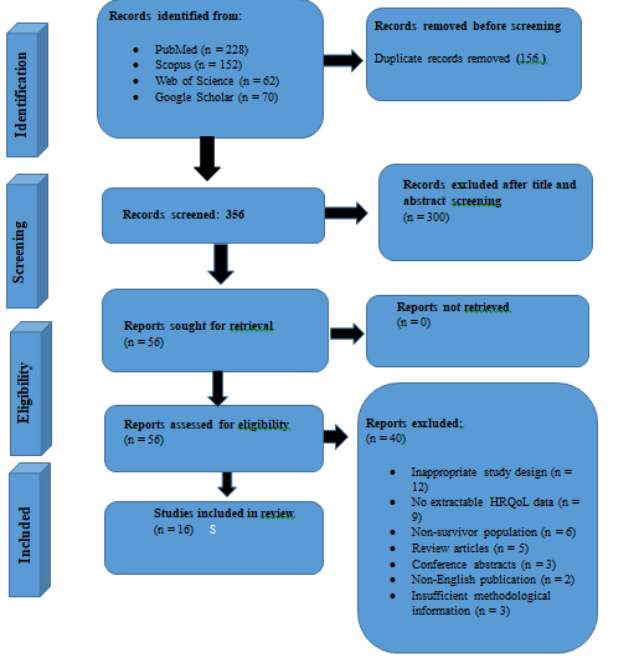
Figure 1. PRISMA 2020 flow diagram illustrating the study selection process for the systematic review of health-related quality of life (HRQoL) among cancer survivors.
Mohsin Ali1 | Hamayun Saqib1*
1Clinical Laboratory Diagnostics , First Affiliated Hospital Xi'an Jiaotong University Xi'an, China | 2Juijiang University of Jiangxi, China
*Correspondence: Hamayun Saqib (hamayunsaqibch@gmail.com)
Received: 21 May, 2026; Revised: 10 June, 2026; Accepted: 15 June, 2026; Published: 20 June, 2026
Background: Health-related quality of life (HRQoL) is an important outcome in the field of cancer survivorship as it encompasses the physical, psychological, social and functional impact of cancer and its treatment over the long-term. The objective of this systematic review was to determine the factors associated with HRQoL in the breast, colorectal, lung and prostate cancer survivor populations. Methods: The review was done in line with PRISMA 2020 guidelines. A search of PubMed, Scopus, Web of Science and Google Scholar databases was conducted for studies published from March 2019 to May 2026. Studies that assessed HRQoL and its associated factors in adult cancer survivors were included in the observational studies. The Newcastle–Ottawa Scale (NOS) was used to evaluate for risk of bias in cohort studies and the Joanna Briggs Institute (JBI) Critical Appraisal Checklist was used to evaluate for risk of bias in cross-sectional studies. Certainty of evidence was assessed by GRADE approach. Results: In all cancer types, advanced disease stages, treatment-related complications, ongoing symptoms, comorbidities, psychological distress and financial hardship were found to be consistently associated with poorer HRQoL. However, healthy lifestyle behaviors, higher levels of physical activity and physical functioning were linked with better HRQoL. Overall, cohort studies had low risk of bias; most cross-sectional studies had moderate risk because of the selection and measurement problems. Conclusions: There are several socio-demographic, clinical, psychosocial, treatment and lifestyle factors affecting HRQoL of cancer survivors. Identification of modifiable determinants early and comprehensive survivorship care can enhance long-term quality of life.
Keywords: Quality of Life; Cancer Survivors; Breast Neoplasms; Colorectal Neoplasms; Lung Neoplasms; Prostatic Neoplasms; Survivorship.
Cancer survivorship is a growing field in oncology because of improvements in early detection and cancer screening, and the significant improvements in treatment modalities that has led to improved survival for many forms of cancer such as breast, colorectal, lung, and prostate cancer 1. With the increasing number of cancer survivors, the focus has turned from survival to improving health related quality of life (HRQoL), which encompasses physical, psychological, social and functional health status following diagnosis and treatment of cancer 2. HRQoL has become an important patient-reported outcome measure to assess the long-term effects of cancer and cancer therapy on patients' functional status and quality of life 3. Survivors of cancer often have long-term physical issues, emotional problems, disablement, side-effects of their treatment, financial problems and social problems that can last beyond the end of treatment 4.
Previous studies have shown that clinical features, treatment options, social and demographic factors, lifestyle behaviours, comorbidities and psychosocial support are all factors that lead to differences in HRQoL in cancer survivors 5. Understanding these determinants is critical to creating individualised survivorship care plans and supportive interventions to meet the needs of this increasingly large population 6. There have been many studies on HRQoL in people who have survived specific cancers, but the evidence has been scattered across the various types of cancer, health care environment, survivorship stage and tools used to measure HRQoL 7. Moreover, there was significant variation in study design and population of survivors, HRQoL questionnaires, and the spectrum of factors assessed, which hindered the ability to draw broad conclusions about the factors associated with HRQoL among all cancer survivors 8. Therefore, a review of the existing evidence is needed to establish consistent predictors and to synthesize the findings overall.
The purpose of this systematic review was to examine HRQoL in cancer survivors of breast, colorectal, lung and prostate cancer, and to draw inferences from the evidence to identify the demographic, clinical, treatment-related, psychosocial, lifestyle and socioeconomic factors impacting HRQoL.
The purpose of this systematic review was to systematically review studies on the topic while maintaining transparency, systematic, and reproducible review processes. Due to the direct retrospective design of this systematic review, which relies entirely on previously published, aggregated public data, this study was not prospectively registered in an international repository. This systematic review was conducted using the Preferred Reporting Items for Systematic Reviews (PRISMA 2020) guidelines to ensure a systematic, transparent, and reproducible review process 9.
Inclusion and Exclusion Criteria: Only original research articles that included evaluation of health-related quality of life (HRQoL) in adult survivors of breast, colorectal, lung or prostate cancer were included. Studies were eligible if they examined patient-reported outcome measures (PROMs) of health-related quality of life (HRQoL) and factors that were potentially related to HRQoL such as demographic, clinical, treatment-related, psychosocial, lifestyle or socioeconomic factors in patients with the eligible conditions, using established PROMs. Observational study designs were included in the study, such as prospective and retrospective cohort studies, longitudinal studies, and cross-sectional studies. Only full-text articles were considered which were published in English and provided full methodological information and a DOI. Reviews, systematic reviews, and meta-analysis, conference abstracts, editorials, letters, case reports, qualitative studies, study protocols, animal studies and studies lacking adequate methodological details or HRQoL outcome data were not eligible for inclusion.
Data Sources: Comprehensive literature research was carried out in PubMed, Scopus, Web of Science, Google Scholar. The literature was reviewed for relevant evidence for HRQoL among breast, colorectal, lung and prostate cancer survivors from January 2015 to February 2026.
Search Strategy: Medical Subject Headings (MeSH) and free-text terms for cancer survivorship and HRQoL were used to develop a search strategy. Typical search terms used were: health-related quality of life, quality of life, cancer survivors, breast cancer, colorectal cancer, lung cancer, prostate cancer, survivorship, patient-reported outcomes and HRQoL. Boolean operators (AND and OR) were employed to improve the search strategy and the reference lists of the eligible articles were hand screened for further relevant articles.
Study Selection: Titles and abstracts were reviewed for possible inclusion in the study after the removal of duplicates. All the articles were then evaluated for inclusion based on the predetermined criteria. Two reviewers selected studies independently and differences in their selections were resolved by discussion, until agreement was reached.
Data Extraction: A standard data extraction form was used to extract the data, and both reviewers independently extracted data. Data gathered were the author, year of publication, country of study, study design, sample size, type of cancer, length of survivorship, HRQoL measurement tool, HRQoL factors, and results of the main study. Where possible, additional methodological features were taken out.
Outcome Measures: The main outcome of interest was health-related quality of life (HRQoL) of cancer survivors. Secondary outcomes encompassed demographic, clinical, treatment, psychosocial, lifestyle and socioeconomic factors impacting on HRQoL, symptom burden, functional status, psychological well-being, and other patient-reported outcomes that affect quality of life.
Quality Assessment: Risk of bias was evaluated in each of the included studies, using the appropriate validated risk-of-bias tools, depending on the study design. The Newcastle–Ottawa Scale (NOS) was used to evaluate cohort and longitudinal studies while the Joanna Briggs Institute (JBI) Critical Appraisal Checklist for Analytical Cross-Sectional Studies was used to evaluate cross-sectional studies 10,11. Overall, the risk of bias was judged low, moderate or high according to assessment criteria. GRADE approach used for asessment of certanity of evidence 12.
Data Synthesis: In addition to the significant variation in study designs, the survivor populations, cancer types, HRQoL assessment tools, and the outcomes reported, a quantitative meta-analysis was not conducted. Rather, findings were synthesized in a narrative way and comprised a summary of the characteristics of the studies, HRQoL instruments used, associated factors, methodological quality, and main findings of the studies included.
Figure 1. PRISMA 2020 flow diagram illustrating the study selection process for the systematic review of health-related quality of life (HRQoL) among cancer survivors.
A total of 512 records were initially found using four electronic databases: PubMed (n = 228), Scopus (n = 152), Web of Science (n = 62), and Google Scholar (n = 70). 156 duplicate records were removed and 356 articles were then subject to title and abstract screening. At this step, 300 articles were excluded due to irrelevance to the review topic, not being an evaluation of HRQoL for cancer survivors, or not being eligible according to the defined inclusion/exclusion criteria. As a result, 56 full-text articles were evaluated for eligibility, and 40 were excluded because of inappropriate study design, inadequate HRQoL data extraction, non-survivor population, insufficient methodology information, review articles, abstracts from conferences, or publication in a language other than English. Finally, 16 studies were found to be eligible and included in this systematic review. The process of selecting the studies is described in the PRISMA flow diagram (Figure 1). The characteristics of the studies included are shown in Table 1 and encompass study design, study characteristics, cancer type, duration of survivorship, HRQoL instruments, outcomes measured, and findings. Overall, the studies examined factors associated with HRQoL in breast, colorectal, lung and prostate cancer survivors who completed validated quality of life measures.
| Author, Year Country | Study Design | Sample Size and Survivor Population | Malignancy | Survivorship Duration | HRQoL Instrument | Outcomes and Factors Assessed | Key Findings |
|---|---|---|---|---|---|---|---|
| Park et al., 202113 USA | Observational cohort study | 2,453 female breast cancer survivors | Breast cancer | Mean 4.9 years after diagnosis | PROMIS Global-10 | Stage, comorbidities, treatment complications, recurrence and mortality | Advanced stage, comorbidities, complications and recurrence were linked with poorer HRQoL; lower HRQoL was associated with higher mortality. |
| Maurer et al., 202114 Germany | Population-based longitudinal cohort study | 1,123 breast cancer survivors and 3,453 controls; women aged 50–74 years | Breast cancer | Assessed before treatment and at 1, 5 and ≥10 years after diagnosis | EORTC QLQ-C30 | Overall HRQoL, functioning, symptoms and age-related differences | HRQoL improved during the first five years and was similar to controls after 10 years; younger survivors experienced greater long-term impairment. |
| Herbert et al., 202315 Germany | Prospective multicentre cohort study | 759 women enrolled; 456 completed the 5-year follow-up | Breast cancer | Five years after surgery | EORTC QLQ-C30 and QLQ-BR23 | Global QoL, physical and social functioning, treatment, psychological factors and physical activity | Poor QoL affected 20%–50% of survivors. Mastectomy, chemotherapy, psychiatric problems, depression and low physical activity predicted poorer functioning. |
| Alvarez-Pardo et al., 202216 Mexico | Cross-sectional descriptive study | 183 women aged 30–80 years with breast cancer | Breast cancer | Time since first treatment, including ≤5 and >5 years | EORTC QLQ-C30 and QLQ-BR23 | Age, surgery type, time since treatment and QoL domains | Younger women had poorer social and sexual functioning. Breast-conserving surgery was associated with better QoL than mastectomy, while survivors beyond five years reported better sexual functioning and fewer breast symptoms. |
| Marcos-Delgado et al., 202417 Spain | Cross-sectional analysis of a follow-up cohort | 805 colorectal cancer survivors; 486 men and 319 women | Colorectal cancer | Median 7.9 years after diagnosis | SF-12 and FCSI | Physical and mental HRQoL; age, sex, region, recurrence and surgery | Older age, female sex and geographic area were associated with poorer HRQoL. Recurrence and radical surgery also affected physical and mental health. |
| Miller et al., 202118 USA | Cross-sectional online survey | 196 colorectal cancer survivors diagnosed at age 18–39 years | Colorectal cancer | 6–36 months after diagnosis or relapse | FACT-C | Global, physical, emotional, social and functional HRQoL; age, disease stage, treatment intensity and time since diagnosis | Overall HRQoL was low. Longer survivorship and older age were linked with better HRQoL, while advanced stage and intensive treatment were linked with poorer HRQoL. |
| Abu-Helalah et al., 202219 Saudi Arabia | Multicentre cross-sectional study | 115 adult colorectal cancer survivors | Colorectal cancer | 12–36 months after diagnosis; no active treatment for ≥6 months | EORTC QLQ-C30, QLQ-CR29 and HADS | Overall and colorectal-specific QoL, physical functioning, symptoms, anxiety and depression | Survivors had poor overall QoL, with fatigue and appetite loss as major symptoms; 55% had moderate-to-severe depression and 31% had moderate-to-high anxiety. |
| Kenkhuis et al., 202220 Netherlands | Prospective longitudinal cohort study | 459 adults with stage I–III colorectal cancer | Colorectal cancer | 6 weeks to 24 months post-treatment | EORTC QLQ-C30 | Lifestyle adherence, HRQoL, physical functioning, fatigue and peripheral neuropathy | Greater adherence to lifestyle recommendations was associated with better physical functioning and less fatigue, but not with peripheral neuropathy. |
| Hsu et al., 202421 USA | Cross-sectional survey study | 232 non-small-cell lung cancer survivors; median age 69 years | Non-small-cell lung cancer | More than 1 year after diagnosis | EORTC QLQ-C30 | Physical, social, emotional and medical needs; QoL and financial toxicity | Greater unmet needs were associated with poorer QoL and higher financial toxicity. Social needs were strongly related to both outcomes. |
| Fonseca et al., 202422 Portugal | Cross-sectional study | 158 long-term lung cancer survivors identified; 100 completed the PRO survey | Lung cancer | More than 5 years after diagnosis | EORTC QLQ-C30 and PHQ-4 | Overall QoL, functioning, symptoms, anxiety and de pression | Emotional functioning was most affected, while pain and fatigue reduced QoL. Anxiety or depression was more common among survivors with poorer QoL. |
| Heiden et al., 202223 United States | Prospective longitudinal cohort study | 334 patients after NSCLC resection assessments | Non-small cell lung cancer | Preoperative to 1 year after surgery | PROMIS | Pain, dyspnea, physical function, HRQoL | Pain and physical function recovered within 6 months, while dyspnea persisted up to 1 year, indicating ongoing QoL impairment after surgery. |
| Riccetti et al., 202224 Germany | Multicenter cross-sectional study | 665 primary lung cancer survivors (49 TKI-treated stage IV, 121 non-TKI stage IV, 495 stage I–III non-TKI) | Primary lung cancer | Survivors after primary lung cancer treatment | EORTC QLQ-C30, PHQ-4 | HRQoL, symptom burden, psychological distress | Survivors receiving TKI therapy reported lower HRQoL and greater treatment-related symptom burden, indicating the need for targeted symptom management to improve quality of life. |
| Mason et al., 202225 United Kingdom | Population-based longitudinal cohort | 21,700 prostate cancer survivors from the LAPCD cohort | Prostate cancer | 18–42 months post-diagnosis with 12-month follow-up | EQ-5D-5L, EPIC-26 | HRQoL, urinary, bowel, sexual function, self-rated health | HRQoL remained stable for most survivors without additional treatment, while men receiving new treatment experienced greater declines in quality of life and functional outcomes. |
| Spampinato et al., 202426 Italy | Prospective multicenter observational study | 293 prostate cancer survivors treated with radical radiotherapy | Localized prostate cancer | Up to 5 years after radiotherapy | EORTC QLQ-C30, IPSS, ICIQ-SF, LENT-SOMA | HRQoL, urinary symptoms, gastrointestinal symptoms, pain, fatigue, insomnia | Persistent urinary and gastrointestinal symptoms, particularly urinary incontinence and rectal pain, were associated with poorer HRQoL. Fatigue had the greatest negative impact on quality of life. |
| Potosky et al., 202427 United States | Population-based cohort study | 1,162 prostate cancer survivors | Prostate cancer | Median 9 months after diagnosis (699 completed follow-up) | PROMIS-29 | Physical, emotional, and social HRQoL, symptom burden, functional status, sociodemographic and clinical predictors | Approximately one in six survivors had poor HRQoL. Younger age, Black race, comorbidities, financial hardship, and lower social/spiritual support were associated with persistently poorer quality of life. |
| Donnelly et al., 201928 United Kingdom | Population-based cross-sectional study | 35,823 prostate cancer survivors | Prostate cancer | 18–42 months post-diagnosis | EPIC-26 | Urinary, bowel, sexual, hormonal function, HRQoL | Symptomatic survivors reported poorer urinary, bowel, sexual, and hormonal functioning than PSA-detected survivors, indicating lower quality of life and greater supportive care needs. |
Abbreviations: HRQoL, health-related quality of life; PROMIS, Patient-Reported Outcomes Measurement Information System; EORTC QLQ-C30, European Organisation for Research and Treatment of Cancer Quality of Life Questionnaire-Core 30; FACT-C, Functional Assessment of Cancer Therapy–Colorectal; SF-12, 12-Item Short Form Health Survey; PHQ-4, Patient Health Questionnaire-4; HADS, Hospital Anxiety and Depression Scale; EQ-5D-5L, EuroQol 5-Dimension 5-Level questionnaire; EPIC-26, Expanded Prostate Cancer Index Composite-26.
The 16 studies that were incorporated into this systematic review were conducted in 10 countries (USA, Germany, Mexico, Spain, Saudi Arabia, the Netherlands, Portugal, Italy, the United Kingdom) and included cohort, longitudinal, prospective and cross-sectional designs. The studies assessed health-related quality of life (HRQoL) in breast, colorectal, lung and prostate cancer survivors, and the length of time since treatment varied from 6 weeks to over 10 years. A range o-f validated questionnaires were employed, primarily the EORTC QLQ-C30, disease-specific modules and other standardized questionnaires (e.g., PROMIS, FACT-C, SF-12, EPIC-26, and EQ-5D-5L). In overall terms, all studies have confirmed a role for demographic, clinical, treatment-related, psychosocial and lifestyle factors in explaining HRQoL, with more advanced disease, multiple comorbidities, intensive treatment, persistent symptoms and unmet supportive care needs being related to lower HRQoL scores. A summary of unique contributions, methodological strengths, clinical significance and limitations of selected studies reviewed is summarized in table 2. This overview serves to give more context to the evidence and to identify certain considerations for cancer survivorship research.
| Author & Year | Unique Contribution to the Review | Study Strength | Clinical Significance | Limitation |
|---|---|---|---|---|
| Hsu et al., 2024 | Examined the combined impact of unmet supportive care needs and financial toxicity on HRQoL in lung cancer survivors | Large multicenter survivor cohort with validated PROMs | Supports integration of financial and supportive care into survivorship programs | Cross-sectional design |
| Fonseca et al., 2024 | Characterized patient-reported outcomes in long-term lung cancer survivors | Comprehensive assessment using validated HRQoL and psychological instruments | Highlights the need for multidisciplinary long-term follow-up | Single-country study |
| Heiden et al., 2022 | Evaluated longitudinal patient-reported recovery after NSCLC surgery | Prospective assessment with repeated PROMIS measurements | Supports routine monitoring of postoperative symptoms | Single-center surgical cohort |
| Riccetti et al., 2022 | Compared HRQoL between TKI-treated and non-TKI lung cancer survivors | Multicenter study using validated patient-reported outcome measures | Provides evidence for tailored symptom management in targeted therapy survivors | Cross-sectional design |
| Mason et al., 2022 | Investigated long-term stability of HRQoL after prostate cancer diagnosis | National population-based longitudinal cohort | Reinforces long-term survivorship monitoring after treatment | Self-reported outcomes may introduce reporting bias |
| Mazariego et al., 2020 | Provided 15-year longitudinal HRQoL outcomes across prostate cancer treatment modalities | Large prospective population-based cohort with long follow-up | Informs shared decision-making regarding long-term treatment effects | Limited to localized prostate cancer |
| Potosky et al., 2024 | Identified demographic, clinical, and psychosocial predictors of poor HRQoL | Population-based cohort with longitudinal follow-up | Helps identify survivors at high risk for poor quality of life | Follow-up cohort smaller than baseline sample |
| Donnelly et al., 2019 | Compared HRQoL according to method of prostate cancer detection | Large nationwide patient-reported outcomes study | Suggests presentation method should be considered in survivorship care planning | Cross-sectional design limits causal inference |
| Spampinato et al., 2024 | Examined persistent symptoms after radiotherapy and their effect on HRQoL | Prospective multicenter observational study | Supports long-term management of treatment-related toxicities | Restricted to radiotherapy-treated survivors |
Based on the Newcastle–Ottawa Scale (NOS) the overall methodological quality of the cohort and longitudinal studies was mostly good. The majority of the studies were found to have a low risk of bias, having clearly defined survivor cohorts, validated HRQoL instruments, appropriate statistical analyses, and adjustment for important confounding variables. Several studies were considered to have moderate risk of bias, mostly because they lacked long-term follow-up of participants or they recruited participants from single centers, and this may have reduced the generalizability of the results. None of the studies had a high overall risk of bias Table 3. Overall evidence was rated as low to moderate. Consistent associations were seen across the included studies, however, the majority of studies were observational, methodological diversity and risk of bias lowered the certainty of the evidence. More carefully planned prospective, multicentre studies are needed to build on the existing evidence base.
| Author, Year | Selection Bias | Comparability (Confounding) | Outcome Assessment | Attrition Bias | Reporting Bias | Other Bias | Overall Risk |
|---|---|---|---|---|---|---|---|
| Park et al., 202113 | Low (Large national cohort) | Low (Multivariable adjusted) | Low (Validated PROMIS) | Moderate (Survey responders only) | Low (Outcomes reported) | Low | Low |
| Maurer et al., 202114 | Low (Population cohort) | Low (Matched controls) | Low (Validated EORTC) | Moderate (Long follow-up loss) | Low | Low | Low |
| Herbert et al., 202315 | Low (Prospective multicentre) | Low (Regression adjusted) | Low (Validated questionnaires) | Moderate (Follow-up attrition) | Low | Low | Moderate |
| Kenkhuis et al., 202220 | Low (Prospective recruitment) | Low (Confounders adjusted) | Low (Repeated validated measures) | Low (High retention) | Low | Low | Low |
| Heiden et al., 202223 | Moderate (Single centre) | Low (Mixed-effects models) | Low (PROMIS validated) | Low (Prospective follow-up) | Low | Moderate (Institution-specific) | Moderate |
| Mason et al., 202225 | Low (Population-based cohort) | Low (Adjusted analyses) | Low (Validated EPIC/EQ-5D) | Low (Repeat survey) | Low | Low | Low |
| Spampinato et al., 202426 | Low (Prospective multicentre) | Low (Adjusted models) | Low (Validated PROMs) | Moderate (Long follow-up) | Low | Low | Moderate |
| Potosky et al., 202427 | Low (Population cohort) | Low (Multivariable analysis) | Low (PROMIS-29 validated) | Moderate (699 follow-up) | Low | Low | Low |
Figure 2 presents the traffic light plot of the risk of bias assessment for the cohort studies. Overall, most studies demonstrated a low risk of bias across the assessed domains, particularly for comparability, outcome assessment, reporting bias, and other bias. Moderate concerns were mainly observed in the domains of selection bias and attrition bias, resulting in an overall moderate risk of bias for three studies, while the remaining studies were judged to have a low overall risk of bias.
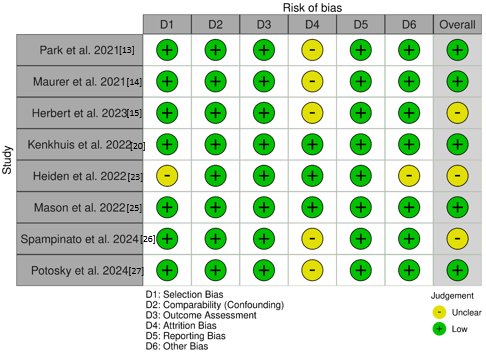
Figure 2. Traffic light plot showing the risk of bias assessment of the included cohort studies across individual methodological domains using the Newcastle–Ottawa Scale (NOS).
The cross sectional studies were evaluated using the Critical Appraisal Checklist for Analytical Cross-Sectional Studies by JBI. Overall, the level of risk of biases of the studies included was low to moderate Table 4. Low-risk studies typically employed validated HRQoL questionnaires, well-defined study populations, and valid statistical analysis, and adjusted for potential confounders. Convenience or hospital-based sampling, online volunteer recruitment and the inherent limitations of cross sectional designs in establishing temporal relationships were the most prevalent reasons for moderate risk ratings.
| Author, Year | Selection Bias | Exposure Measurement | Outcome Measurement | Confounding | Statistical Analysis | Other Bias | Overall Risk |
|---|---|---|---|---|---|---|---|
| Alvarez-Pardo et al., 202216 | High (Convenience sampling) | Low (Clinical records) | Low (Validated EORTC) | Moderate (Limited adjustment) | Low (Appropriate tests) | Moderate | Moderate |
| Marcos-Delgado et al., 202414 | Low (Established cohort) | Low (Registry data) | Low (Validated SF-12) | Low (Regression adjusted) | Low | Low | Low |
| Miller et al., 202118 | High (Online volunteers) | Moderate (Self-reported treatment) | Low (FACT-C validated) | Moderate (Residual confounding) | Low | Moderate (Selection bias) | Moderate |
| Abu-Helalah et al., 202219 | Moderate (Hospital sample) | Low (Clinical information) | Low (Validated tools) | Moderate (Limited adjustment) | Low | Moderate | Moderate |
| Hsu et al., 202421 | Moderate (Single cancer centre) | Low (Medical records) | Low (Validated EORTC/COST) | Low (Adjusted regression) | Low | Moderate | Moderate |
| Fonseca et al., 202422 | Moderate (Responder sample) | Low (Clinical records) | Low (Validated questionnaires) | Moderate (Limited adjustment) | Low | Moderate | Moderate |
| Riccetti et al., 202224 | Low (Multicentre recruitment) | Low (Clinical records) | Low (Validated instruments) | Moderate (Residual confounding) | Low | Low | Low |
| Donnelly et al., 201928 | Low (National survey) | Low (Clinical information) | Low (Validated EPIC-26) | Low (Adjusted analyses) | Low | Low | Low |
The traffic light plot of the risk of bias assessment of the included cross sectional studies is shown in figure 3. The overall quality of the studies was generally low in terms of exposure, outcome and statistical analyses. Overall, most studies exhibited moderate risk of bias, primarily due to moderate or high concerns with selection bias, confounding, and other bias; three studies were determined to have low overall risk of bias.
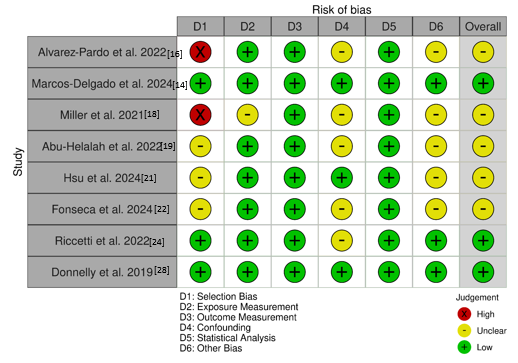
Figure 3. Traffic light plot showing the risk of bias assessment of the included cross-sectional studies across individual methodological domains using the Joanna Briggs Institute (JBI) Critical Appraisal Checklist.
The results of this systematic review show that health-related quality of life (HRQoL) is affected by many demographic, clinical, psychosocial and treatment factors in various cancer survivor populations 29. The studies included were survivors of breast, colorectal, lung, and prostate cancer, and included a prospective cohort, longitudinal, observational, and cross-sectional study design. While the type of cancer and duration of survivorship varied among studies, and a range of tools were used to measure HRQoL, most studies found that having advanced disease, complications of treatment, comorbidities, psychological distress and enduring symptoms were related to lower HRQoL, while better physical functioning, healthy lifestyle behaviours and higher levels of social support were associated with better HRQoL 30,31.
HRQoL is most commonly affected in breast cancer survivors, studies consistently showed that HRQOL is impacted well after the end of treatment 32. The stage of the disease, disease recurrence, treatment-related complications, mastectomy, chemotherapy, psychiatric disorders, and low physical activity were the significant factors predicting less favorable HRQoL 33. Younger survivors had also suffered more dysfunction in their social, emotional and sexual functioning than older women 34. Although in general HRQoL improved with time and was similar to the general population in long-term survivors, the HRQoL scores of a number of patients continued to show specific functional and psychosocial problems that require ongoing survivorship care post active treatment 35.
Lifestyle behaviours, disease recurrence, treatment intensity, and demographic characteristics were found to have an impact on HRQoL among colorectal cancer survivors 36. Increased age, female gender, advanced disease, disease recurrence, and intensive treatment were linked to worse physical and mental health 37. The adherence to lifestyle was related to improved physical functioning and decreased fatigue, especially the regular physical activity and ensuring a healthy body weight 38. The lung cancer studies have shown that there is still significant symptom burden following successful treatment 39. Persistent dyspnoea, fatigue, pain, anxiety and depression were all factors that were consistently associated with poorer HRQoL whilst met supportive care needs and financial toxicity were associated with better HRQoL 40. The quality of life of survivors was significantly poorer if they were taking targeted therapies or were aware that their physical and social needs were not being met as well as those with less supportive care needs 41. This study highlights the need to incorporate the treatment of symptoms, psychosocial support, and financial counseling in lung cancer survivorship programs.
Likewise, prostate cancer survivors had long-term ED, urinary incontinence, bowel dysfunction and hormonal dysfunction which significantly impacted HRQoL 42. Important factors associated with lower QOL were persistent urinary and GI symptoms, extra cancer treatments, comorbidities, financial problems, and lack of social support 43. The majority of the survivors had stable HRQoL over time, but significant declines were seen in those who received further treatment or had persistent treatment-related symptoms, indicating the need for long-term functional assessment and/or support 44.
The systematic review has some limitations including inclusion of only English language studies (where full texts were available); the diversity of cancer types, HRQoL instruments, and outcome measures prevented direct comparisons across studies and prevented quantitative meta-analysis. Also, the studies included in the review had some methodological limitations such as mostly observational studies, mostly cross sectional designs and variable sample sizes. Future studies should focus on large prospective multicenter studies with standardized HRQoL instruments with extended follow-up periods to fully elucidate changes in HRQoL over the survivorship period. More emphasis also needs to be placed on psychosocial interventions, lifestyle modification, financial assistance and symptom management interventions which can enhance long-term HRQoL among a wide range of cancer survivor groups.
This systematic review shows that there are several demographic, clinical, treatment related, psychosocial and lifestyle factors affecting the health-related QOL of cancer survivors. In all cancer survivors (breast, colorectal, lung, prostate), advanced disease, persistent symptoms, co-morbidities, psychological distress and financial burden were all correlated with poor HRQoL. On the other hand, healthy lifestyle behaviors, social support and good physical functioning were associated with higher quality of life level. Efforts are needed to further validate the evidence and maximize HRQoL survivorship care through large multicentre prospective studies using standardized HRQoL measures.

Journal of Medical and Multidisciplinary Healthcare Research, J Med Multidiscip Healthc Res 2026:1(1), p21-29 (jmmhr.com) © 2026 Authors. This work is published by Multidisciplinary Scholarly Advancement and Research MSAR Institute. The full terms of Journal Publishing policy is available at https://jmmhr.org/index.php/jmmhr/journal-policies and incorporate the Creative Commons Attribution – Non Commercial (CC BY, NC 4.0) License https://creativecommons.org/licenses/by-nc/4.0/. By accessing the work you hereby accept the Terms. Non-commercial uses of the work are permitted without any further permission, provided the work is properly attributed. Publisher’s Note: MSAR Institute remains neutral with regard to jurisdictional claims in published maps and institutional affiliations, and assumes no liability for the scientific accuracy or clinical efficacy of the content herein, as they rest entirely with the authors.